How a Birthday Card Generated $90,000 in 90 Days
Ninety thousand dollars came in within ninety days. It did not come from a campaign, a funnel, or anything complicated.
It came from a birthday card.
But the card was not where the story started. The story started with a decision Mitchell made before a single new client had walked through the door, a decision his intuition told him was right before any data confirmed it, and that created the pressure that eventually led to the simplest and most effective marketing move his clinic had ever made.
The Expansion His Situational Intuition Told Him to Make
Mitchell owned a physiotherapy and massage clinic. When he sensed that long waitlists were beginning to frustrate his clients and quietly erode the trust his brand had built, he made a move most business advisors would have told him to wait on.
He trusted his Situational Intuition.
He expanded the clinic from 750 square feet to more than 2,500. He hired a physiotherapist and a massage therapist immediately so he could treat more patients from day one. He did not yet have the client load to fill their calendars. He did not wait for the data to justify the move. His Situational Intuition told him the timing was right: that the window for this expansion was genuinely open and that moving before the waitlist became a brand problem was the correct call.
It was. But once the doors opened and the rooms were empty, the pressure arrived with them.
Empty rooms do not just sit there. They cost money every day. More space means more overhead, more payroll, and more urgency to make decisions fast. And urgency is precisely when entrepreneurs start doing things that do not fit how their business actually works, reaching for louder, more aggressive, more expensive solutions to a problem that often has a quieter answer.
What Step 4 of the Intuitive Branding Process Found
When Mitchell entered Step 4 of the Intuitive Branding Process, we told him directly: what he needed was not a clever idea or a big expensive marketing plan.
He needed something that would naturally bring in people who were already likely to need physiotherapy and massage. And when we slowed down and looked at how his business was actually running, the answer was already there.
The fastest revenue was not going to come from strangers. It was going to come from the clients who already trusted the clinic, already knew the staff, already felt comfortable being there, and many of whom were already leaving five-star reviews without being asked.
They did not need convincing. They just needed a reminder. And they were also his cheapest possible form of marketing: genuine word of mouth from people who had already experienced the care firsthand.
Marketing researchers who study customer acquisition costs have consistently found that warm existing clients convert at significantly higher rates and lower costs than cold audiences, and that personal, relationship-based outreach consistently outperforms campaign-based approaches for service businesses built on trust.
How Three Intuitive Types Aligned on One Simple Idea
The birthday card idea emerged from the alignment of three intuitive types pointing in the same direction simultaneously.
Relational Intuition read the existing client relationships clearly. These were people who had experienced the care of the clinic personally, trusted the practitioners, and had a genuine relationship with the brand. The energy of that audience was warm, not transactional. A personal gesture would land as appreciation, not as a sales tactic, because the relationship had already been built.
Experiential Intuition confirmed what the pattern said about warm audiences. Mitchell’s experience with his own clients told him that people who had already been treated at the clinic would not receive a birthday card as a promotion; they would receive it as recognition. His scars from watching impersonal marketing campaigns generate cold responses in the past reinforced the signal: the closer the gesture matched how the relationship actually felt, the better it would land.
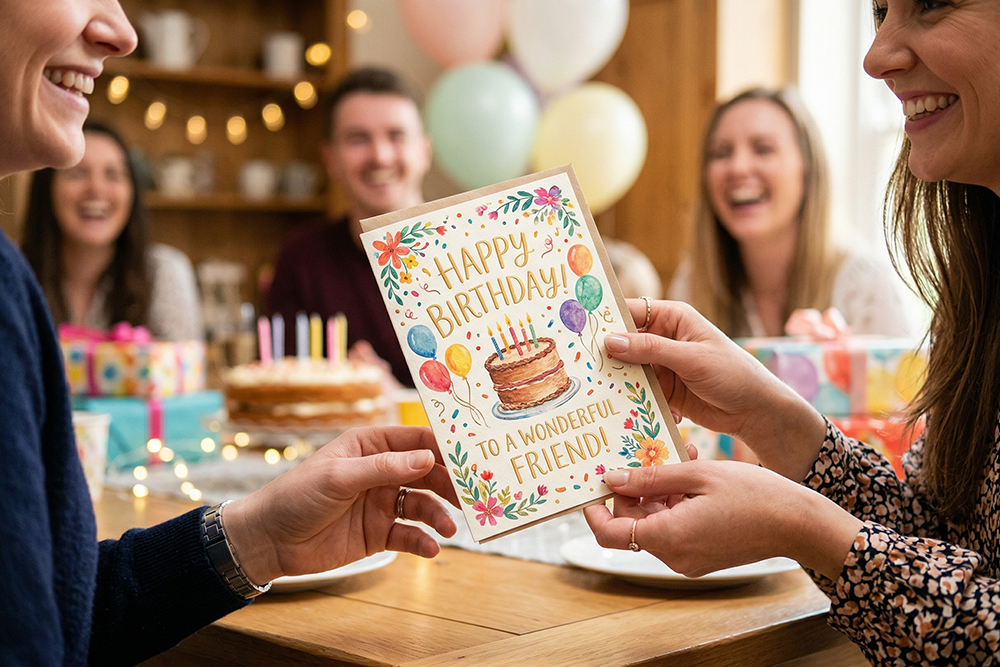
Creative Intuition generated the spark: a birthday card, mailed during the month of the client’s birthday, with a personal thank-you message inside, a 20 percent discount on massage therapy for themselves and two friends or family members, and a small local coffee gift card to keep it human. Nothing about it felt salesy or promotional. It felt like appreciation. Because it was.
A staff member followed up with a simple phone call, just to say happy birthday and thank the client for being part of the clinic.
That was it.
All three intuitive types were pointing in the same direction. Mitchell trusted what they were showing him.
What Happened Next
Phones started ringing. Appointments filled up. Clients brought people they trusted, like friends, family members, colleagues, many of them thanking the team for the gesture before they had even booked their first appointment.
Within 90 days, both new practitioners were booked out faster than anyone had anticipated. The stress about empty rooms faded. The bank account grew by $90,000.
As Mitchell put it afterward: “I didn’t realize it could feel this straightforward.”
It was not that it was easy. It just did not feel forced. And that absence of force, the quality of a decision that aligns with how clients already think and behave, is exactly what genuine Intuitive Marketing produces.
The birthday card worked not because it was a clever tactic. It worked because it matched the felt signal of the existing client relationships so precisely that it deepened trust rather than transacting it. The clients who received it felt seen. The ones they referred arrived already trusting the clinic before their first appointment.
What This Story Actually Teaches
Most entrepreneurs, when facing the pressure of empty rooms and growing overhead, reach for something louder. A social media push. A discount campaign. A paid ad strategy. Something that feels like action.
What Mitchell needed, and what the Intuitive Branding Process found, was something quieter. Something that matched the actual felt quality of the relationships the clinic had already built.
As Sunil Godse writes in Build Trust. Become the Brand.: “The market does not trust what you claim. It trusts what it feels.”
The birthday card felt like the clinic. It felt like the people who worked there. It felt like the care clients had already experienced. That alignment between the felt signal of the marketing and the felt signal of the actual brand is what made it work, and what made $90,000 follow in 90 days.
When things inside a business start to feel heavy and you are working harder without seeing it show up in the bank, it is rarely because you need something louder or more aggressive. It is usually because something in your business has stopped making intuitive sense, and the answer is almost always quieter than you expect.
Find Out Which of Your Four Types Needs Attention
Mitchell’s result came from three intuitive types working together: Situational, Relational, Experiential, and Creative, all pointing in the same direction. The Intuition Scorecard takes 60 seconds and shows you which of your four types is currently strongest and where your blind spots may be forming.
Take the Intuition Scorecard →
→ Related: Step 4 — Intuitive Marketing: Making Customers Feel You Before They Hear You → Related: Relational Intuition — Why the Room Knows Before Your Metrics Do → Related: Experiential Intuition — How Your Business Scars Become Your Sharpest Decisions → Related: Creative Intuition — When to Trust the Spark and When to Test It → Related: The 5-Step Intuitive Branding Process → Related: The Four Intuitive Types → From the book: Build Trust. Become the Brand.